Agents Invest Testimonials Insights About Contact
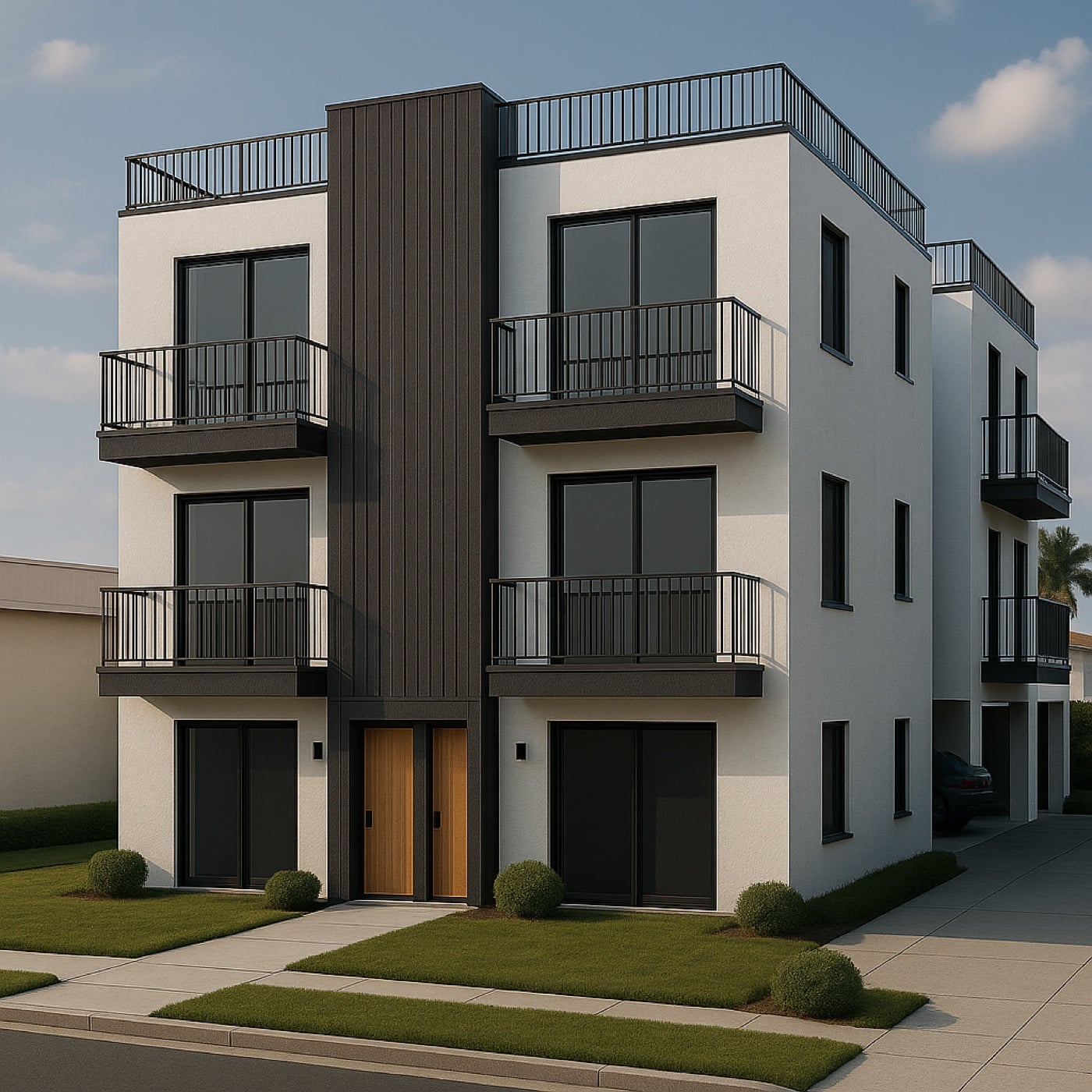
The Culver VI, a Thornton Development Group development in West Los Angeles

California Housing Laws · Los Angeles

California housing laws,
read parcel by parcel.

Six statutes now govern what a Los Angeles lot can become, and they overlap, contradict each other, and get switched on and off locally. Here is what each one does, which parcels it reaches, and which question it actually answers.

Why This Page Exists

The statute is the easy half.

There is no shortage of good writing on these bills. Nearly all of it is written by law firms and advocacy groups, and nearly all of it stops at what the statute says.

That leaves the two questions a landowner actually has. Does this reach my parcel — given its zoning, its jurisdiction, its hazard overlays, and whatever the local council did last June? And if it does, does the resulting project pencil?

We answer those for a living, on our own sites and on other people’s. The pages below are written from that side of it: what the law allows, where it stops, and what it costs to use.

These summaries are screens, not legal opinions. Eligibility turns on the specific parcel and on current agency interpretation, and none of it substitutes for counsel — see our legal disclosures.

The Laws

Which one answers your question.

SB 79 — housing near transit

Makes qualifying transit-oriented housing an allowed use on residentially, commercially or mixed-zoned land within a half mile of a qualifying stop, with guaranteed height, density and floor area. In effect statewide since 1 July 2026 — but Los Angeles paused most of it the day before and substituted its own program, and it does not reach unincorporated county land until around 2029.

SB 79 in Los Angeles

SB 684 & SB 1123 — small-lot subdivision

Up to ten lots and ten homes on a qualifying urban infill parcel, approved ministerially with no hearing. SB 684 covers multifamily-zoned land; SB 1123 extended it to vacant single-family lots. The vacancy requirement is what disqualifies most inquiries, and the average-unit-size cap is what decides whether the rest pencil.

Lot splits under SB 684 & SB 1123

SB 330 — vesting and procedure

The Housing Crisis Act. A preliminary application freezes the standards and fees that apply to your project as of its filing date, caps hearings at five, and blocks downzoning. It does not give you more units — it stops you losing the ones you already had a right to while entitlement grinds on.

SB 330 preliminary applications

SB 9 — the duplex and lot-split law

Splits a single-family lot in two, with up to two units on each. Narrower than SB 684 and SB 1123 but far less demanding — notably, it does not require a vacant lot. For a hillside parcel where the transit programs do not reach, this is usually the live question.

SB 9 vs SB 684 vs SB 1123

The ADU statutes — AB 1033, SB 1211 and the rest

One detached ADU plus a junior ADU on a single-family lot; up to eight detached units on existing multifamily; conversions, parking relief, and — where a city opts in under AB 1033 — the ability to sell an ADU separately as a condominium. The most reliable added density in Los Angeles, and the least contested.

ADU rules, costs and permits

Fire rebuild and the Palisades track

Not a density law, but the same kind of problem: a streamlined permitting path with its own eligibility rules, its own counters, and a cost structure that does not resemble ordinary ground-up work. Separate pages, because the questions are separate.

Fire rebuild permits

How They Interact

Four things the individual explainers miss.

Jurisdiction comes before statute

City of Los Angeles and unincorporated Los Angeles County are different regimes running different timetables. SB 79 does not reach unincorporated land until the seventh housing needs cycle, anticipated around 2029. Addresses in Altadena, Topanga and much of the Santa Monica Mountains read as Los Angeles and are not in the city. Establish this first; it changes everything downstream.

Hazard overlays override entitlement

Very High Fire Hazard Severity Zones, Hillside Areas, the Coastal Zone and sea-level-rise exposure are carved out of program after program. A hillside parcel can clear a statute on its face and be excluded by three overlays. For a Hollywood Hills lot this is usually the determining fact, and it is almost never the first thing anyone checks.

Procedural and substantive laws stack

SB 330 fixes the rules in time. SB 79, the lot-split statutes and density bonus change what you can build. They are not alternatives — the right sequence is usually to vest first and then entitle under whichever substantive program the parcel supports.

Ministerial is not the same as fast

Removing discretion removes the hearing, not the work. Objective standards still have to be met, utilities still have to be brought in, and mapping still takes time. What you buy is certainty and a shorter tail — which is worth a great deal, and is not a shortcut.

Send us the address.

We’ll run the parcel against all of it — jurisdiction, zoning, overlays, and which programs are live — and tell you which law is worth your attention. Including when the answer is none of them.

Check Your Parcel Develop With TDG