Agents Invest Testimonials Insights About Contact
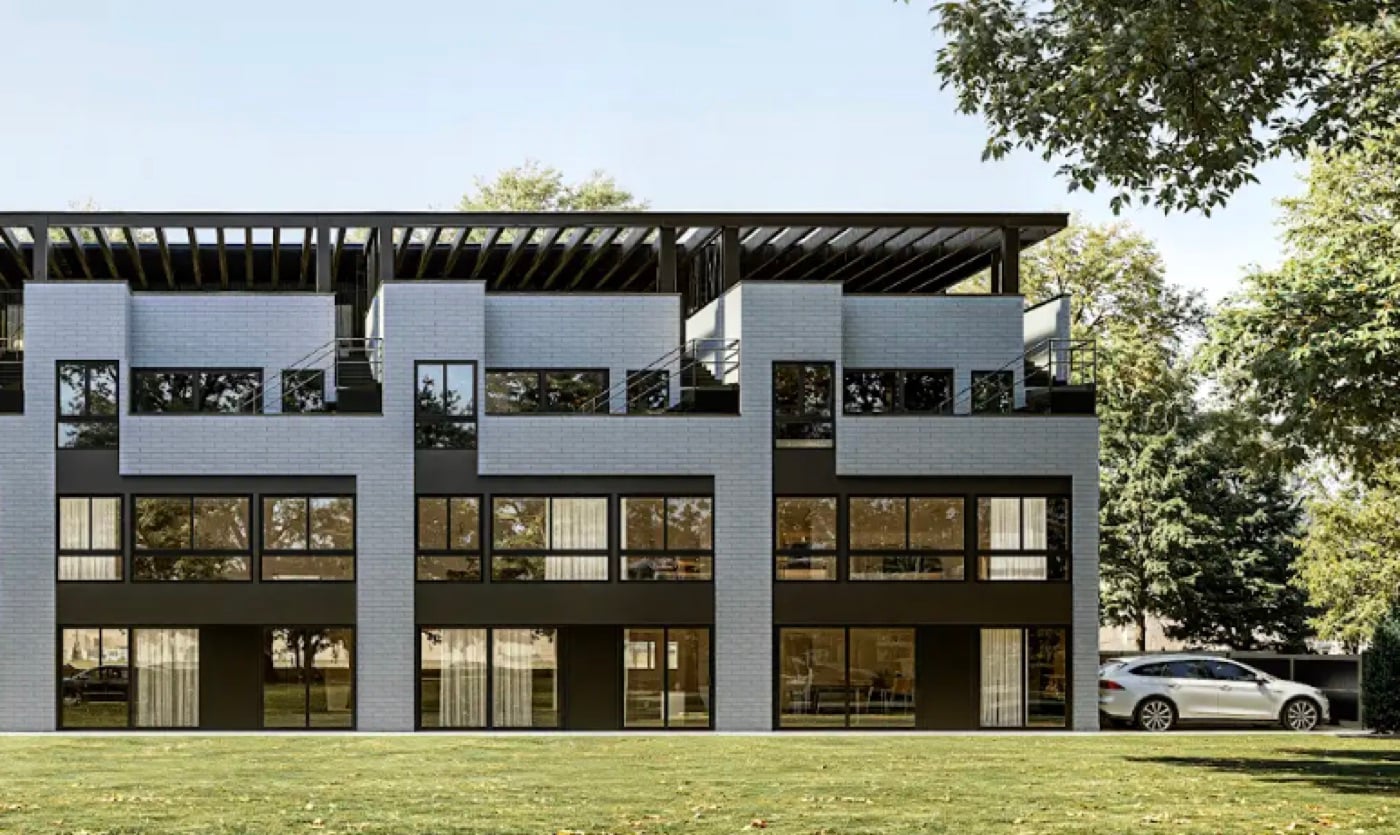
The Harter V, a Thornton Development Group development in Culver City

SB 330 · California

SB 330: stop the rules
changing mid-project.

The Housing Crisis Act lets you freeze the standards and the fees that apply to your project before you have finished designing it. One form, one fee, one date stamp — and the city loses the ability to move the target. It is the cheapest protection in California housing law, and it is routinely left on the table.

What It Is

A date stamp that freezes the rulebook.

SB 330, the Housing Crisis Act of 2019, created a preliminary application: a short, defined set of information you can file long before a full submittal is ready.

File it complete, pay the processing fee, and the ordinances, policies, development standards and fees that apply to your project are fixed as of that date. New impact fees, new standards, a new overlay adopted six months later — none of it reaches you.

The protection matters because entitlement in Los Angeles is slow enough that the rules genuinely do change mid-project. A fee schedule revision between your first sketch and your permit can move a pro forma by six figures. SB 330 is how you take that risk off the table on day one instead of absorbing it.

It was due to sunset at the start of 2025. The Legislature extended it to 1 January 2030, and amended it again through AB 1886 and AB 1893, both effective 1 January 2025.

Chapter 654, Statutes of 2019. The preliminary application is Government Code section 65941.1; the Act also amended the Housing Accountability Act at section 65589.5 and the Permit Streamlining Act, and added the no-net-loss provisions at section 66300 and following.

The Mechanics

Four rules that decide whether it holds.

Vesting is not automatic and it is not permanent. It attaches on a complete filing and it can be lost. These are the ones that catch people.

Complete means complete

The statute lists the information required — and a city must accept the state form if it has not published its own. An incomplete filing does not vest anything. The date you care about is the date it is deemed submitted, not the date you walked it in, so the gap between those two is the only part worth being fussy about.

You have 180 days to follow with the real application

Miss that window and the vesting expires. Six months sounds generous until it is running alongside survey, soils, and a design that is still moving — so the filing should be timed to a design that is substantially settled, not fired off as a placeholder the moment you close escrow.

A 20 percent change resets the clock

If the unit count or the square footage of construction moves by 20 percent or more, you have to refile, and the vesting date moves with it — to today’s rules, not the ones you locked. Increases that come from Density Bonus Law are excluded from that calculation. This is the single most expensive mistake available here: file early on a loose scheme, grow it by a quarter, and the protection you paid for quietly evaporates.

It covers housing projects, not every project

Residential development creating two or more units, or mixed-use where at least two-thirds of the floor area is residential. Hotels do not count. Neither do the discretionary legislative acts — a zone change, a general plan amendment or a planned development rezone sits outside the vesting.

The Rest Of The Act

Vesting is the headline. It is not the whole bill.

Five hearings, maximum

A compliant housing development project cannot be made to sit through more than five hearings. The open-ended continuance — come back in six weeks, come back again — is the standard way a project dies without ever being denied. This caps it.

No downzoning

A city cannot reduce the residential capacity of a site below what applied in 2018 without finding equivalent capacity elsewhere. Protection for land you bought on the strength of its zoning.

Replacement units

Demolishing protected or occupied units triggers replacement obligations and tenant protections. These apply well beyond SB 330 — a transit project under SB 79 has to satisfy them too.

Taken together, the Act is less a development tool than an insurance policy. It does not get you more units. It stops you losing the ones you already had a right to — which, on a two-year entitlement in Los Angeles, is frequently where the money is.

Summarized from the statute as amended and in effect. Which protections reach a given project depends on the parcel, the jurisdiction and the application posture — this is a screen, not a legal opinion, and no substitute for counsel. See our legal disclosures.

How We Use It

Where it sits in our sequence.

1 · Settle the scheme first

Unit count and gross area pinned down inside the 20 percent band before anything gets filed. Filing early on a scheme that is still moving is worse than not filing.

2 · File the preliminary application

Complete, with the fee, and documented — the record of which standards and fees were in force on the stamp date is what you will actually rely on later if a counter disagrees.

3 · Run the 180 days as a schedule

Survey, soils, title and construction documents sequenced against the deadline rather than against hope. The window is the project schedule from that point forward.

4 · Stack it with whatever else the parcel qualifies for

SB 330 is procedural, so it layers. Vest the rules, then build under the lot-split statutes, a transit-oriented program, or density bonus — whichever the parcel actually supports.

Talk Through Your Site All California Housing Laws

Good Questions. Straight Answers.

Before you file anything.

What exactly does an SB 330 preliminary application freeze?

The ordinances, policies and development standards that apply to the project, plus the fees — development impact fees, capacity and connection charges, and permit processing fees. As of the date the filing is deemed submitted. A standard or fee adopted after that date does not apply to your project.

Is SB 330 still in effect?

Yes. It was originally set to expire on 1 January 2025 and has been extended to 1 January 2030. AB 1886 and AB 1893, both effective 1 January 2025, amended related provisions.

How long do I have after filing?

180 days to submit the full application for the required permits. If you miss it, the vesting expires and you are back to whatever rules are current when you do file.

What happens if my project changes after I file?

A change of 20 percent or more in unit count or square footage of construction requires resubmitting the preliminary application, and the vesting date resets to the new filing. Increases attributable to Density Bonus Law are excluded from that threshold. Smaller changes do not disturb the vesting.

Does it apply to a single-family house?

No. The protection is for a housing development project — two or more units, or mixed-use with at least two-thirds residential floor area. A single residence on its own lot is outside it. If you are splitting the lot first, SB 684 and SB 1123 are the statutes to look at.

Can I use it alongside SB 79 or a lot split?

Yes, and you generally should. SB 330 is procedural — it fixes the rules in time rather than changing what you can build. The substantive entitlement still comes from whichever program fits the parcel: SB 79 near transit, SB 684 or SB 1123 for a subdivision, density bonus, or an ADU.

Do you handle this, or do I need a land use attorney?

We prepare and file it as part of entitlement, and we keep the record of what was in force on the stamp date. For anything contested — a disputed vesting date, a city applying a standard it should not — you want land use counsel, and we will say so rather than improvise.
Thinking about a multi-unit project?

Send us the address. We’ll tell you what the parcel supports, which programs reach it, and when the preliminary application should go in.

Talk Through Your Site Develop With TDG