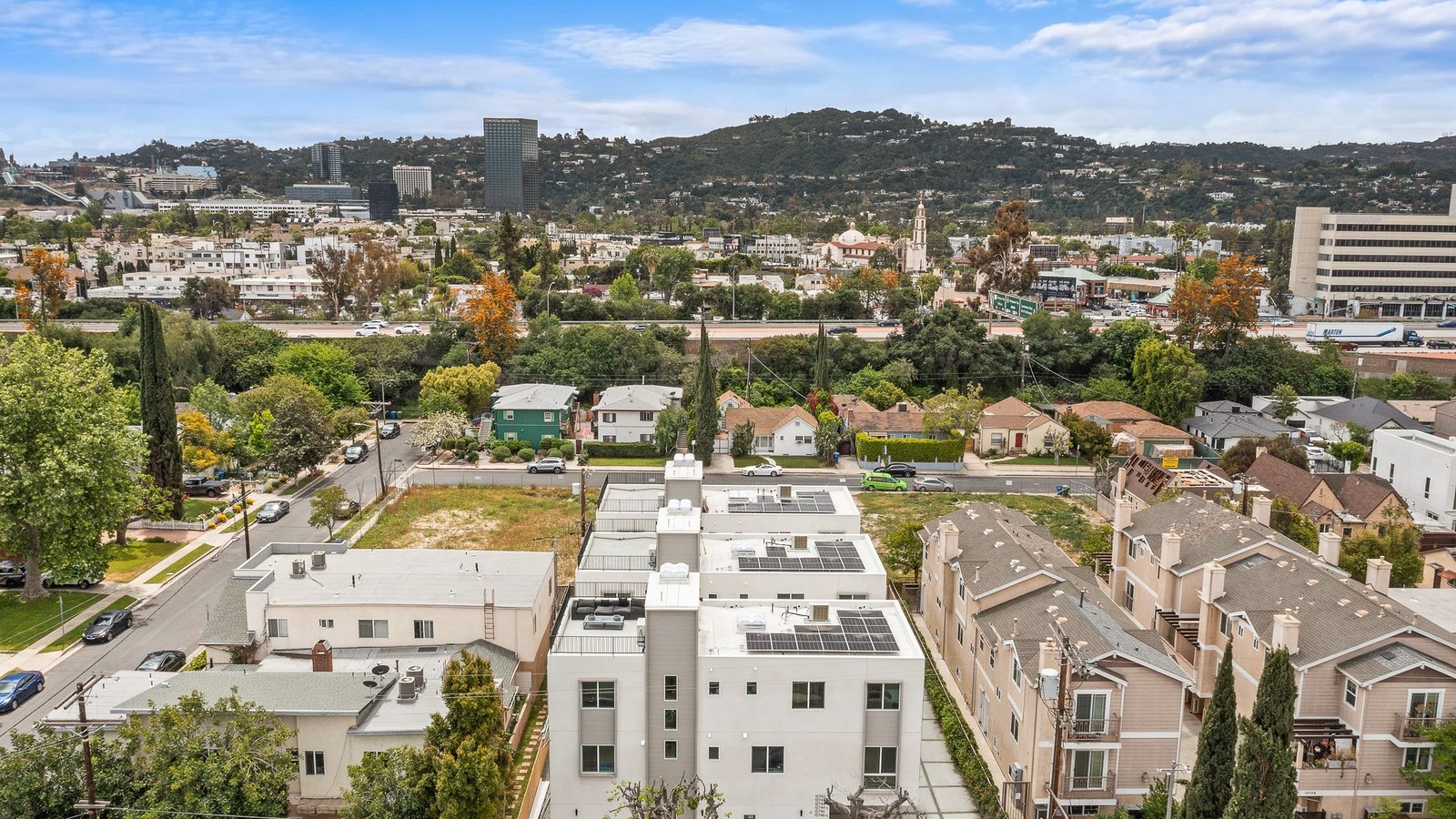
If you own a teardown, a hillside parcel, or a small house on a large lot in Los Angeles, you have probably had a postcard from someone offering to buy it. Selling land to a developer is a genuinely different transaction from listing a home, and the differences are worth understanding before you reply to any of them.
What a developer is actually buying
A developer is not buying your house. They are buying what the lot can legally become, minus what it costs to get there. That distinction explains almost everything else about the process — including why condition matters far less than you would expect.
At TDG we underwrite the land and what can be built on it: zoning, lot size, neighbourhood comps for the finished product, and the cost and time required to deliver it. The offer falls out of that arithmetic. We walk sellers through the reasoning rather than handing over a number, because a number with no reasoning behind it is impossible to evaluate.
Condition is close to irrelevant
Deferred maintenance, dated systems, foundation problems, unpermitted work, a property that would never pass a conventional inspection — none of it changes the calculation much, because the structure is coming down. We buy as-is. There is no reason to paint, stage, clear the property, or repair anything first.
This is the single biggest practical difference from a market sale, and it is where most of the savings sit. No staging, no pre-listing renovation, no repair credits negotiated after inspection.
What makes a lot attractive
The properties that interest us most are, in rough order:
- Teardowns and fixers — houses at the end of their useful life on streets worth building on. The worse the condition relative to the block, the better.
- Hillside and view lots — raw land or an existing structure on a slope. Caissons and grade do not deter us.
- Underbuilt properties — a small house on a large lot, or a single-storey on a street that has gone two-storey. The unused square footage is the opportunity.
- Multifamily and SB-8 exempt sites — parcels that pencil for four to six units, or larger where zoning supports it.
- Entitled or pre-RTI projects — if you already hold plans or approvals, that work has value and we would rather buy it than start over.
Commissions, fees and timing
Selling directly means no listing commission and no preparation costs. Standard closing costs and your own advisors are the usual exceptions, and those should be laid out in writing before you sign anything.
Timing is negotiable in both directions. Some sellers want a fast, certain exit. Others need several months to find their next place and would rather the closing date bend around them. A direct sale can accommodate either; a listed sale largely cannot.
When listing is the better answer
Sometimes it is. A developer offer should be compared against what a listed sale would likely net after commissions, repairs, staging, carrying costs and time on market — not against the headline asking price of the house down the street.
We run that comparison honestly, and when listing wins we say so. Any developer unwilling to show you that math is asking you to take their number on faith.
Trusts, probate and inherited property
A large share of development land changes hands through estates. Trustees and families settling inherited property face extra steps and longer timelines, and a buyer who has done it before is worth more than one offering a slightly higher number.
The third option
Selling is not the only way to capture what a lot is worth. If the land is worth more developed than sold, you can keep it and build — which is what Develop With TDG exists for. Owners weighing a fire-affected parcel should also see the Community Rebuild Initiative, where the rebuild-or-sell question gets run both ways.
If you want to see what your lot supports, send us the address. We will tell you what we would pay, how we got there, and whether we think you should take it.